
Choosing a Gate, an Opener and an Entry System
How gate styles, materials, openers and entry systems compare, and what changes the cost of a project, so you can plan before we come look.
A new gate comes down to four choices: how it moves, what it is made of, what opens it and how people get in. Each one changes how the gate fits your drive, how much upkeep it needs and what the project costs.
We leave prices off this page on purpose: two gates that look alike can cost very different amounts once the ground, posts and power are counted. What we can show is which choices push a project up or down.
Gate Options Comparator
Pick one option in each list and press Compare to see the pros, the things to think about and how each choice tends to move the cost.
Choose a style, material, operator and entry system, then press Compare.
Gate Types Compared
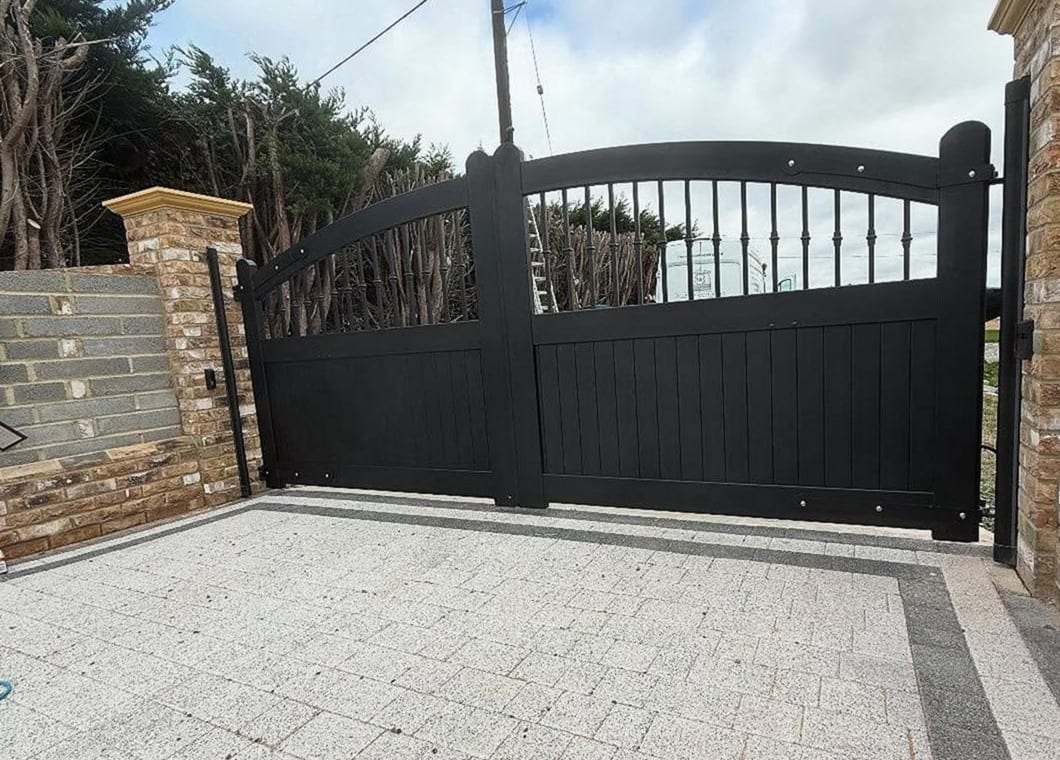
How a gate moves decides whether it fits your property. A swing gate needs room in front of or behind it; a sliding gate needs room along the fence. A drive that rises toward the house can stop a swing gate short, while a slider stays level across it.
| Type | How it moves | Space needed | Best suited for | Considerations |
|---|---|---|---|---|
| Single swing | One leaf turns on hinges | A clear arc as deep as the gate is wide | Narrower drives and yards on level ground | The whole arc must be shoveled in winter |
| Double swing | Two leaves meet in the middle | Two smaller arcs, one on each side | Wide driveways and a balanced look | Two sets of hinges and a center stop to keep aligned |
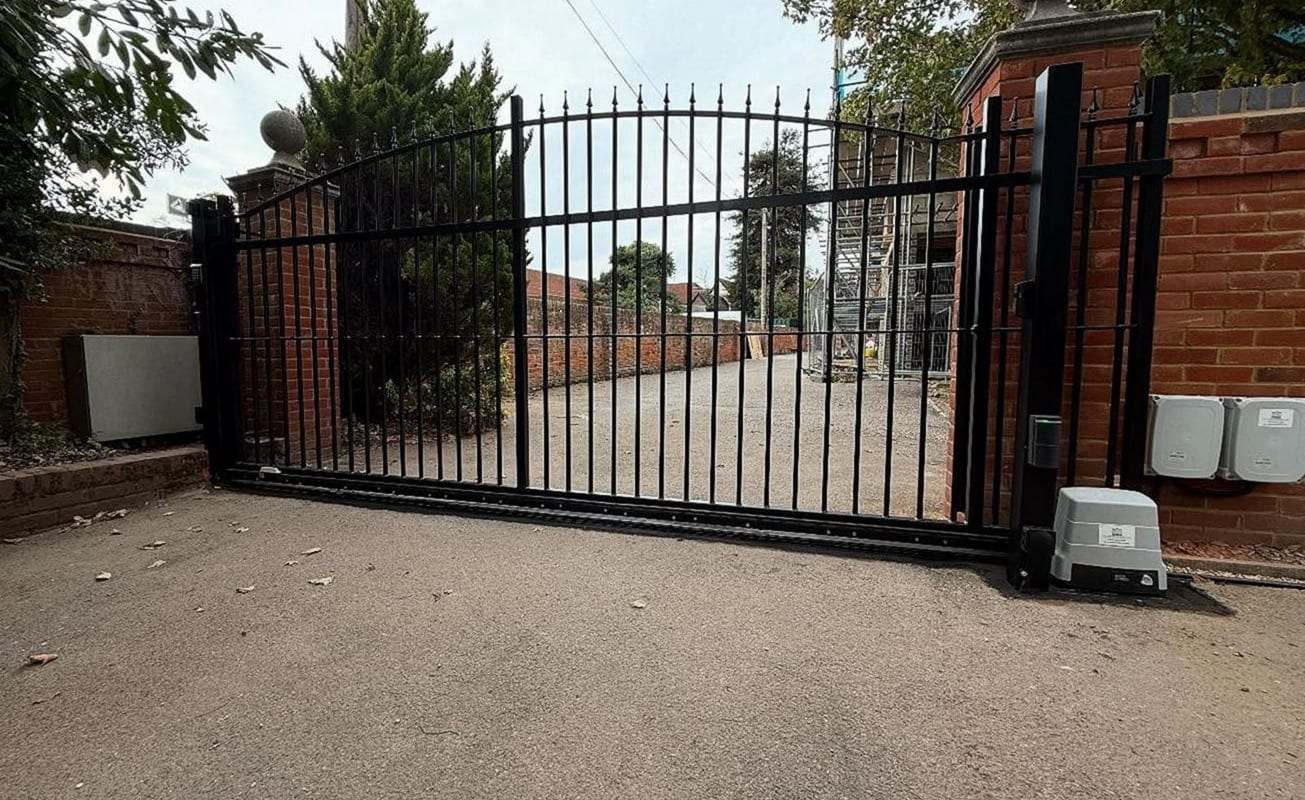
| Sliding | Rolls sideways on wheels along a ground track | A side run along the fence about as long as the opening | Sloped drives and business lots | The track must stay clear of grit, snow and ice |
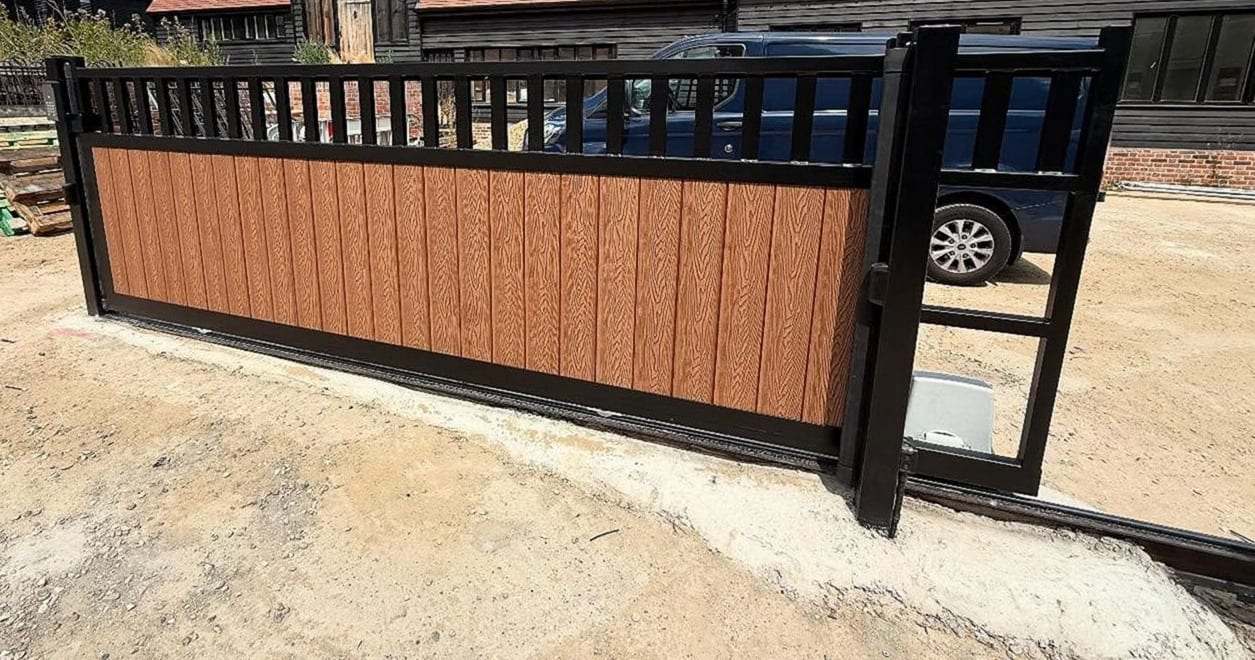
| Cantilever slide | Rolls on post-mounted rollers, no ground track | A longer side run than a track slider | Wide openings and lots that are plowed often | A heavier frame and stout posts |
| Bi-folding | Each leaf folds in half as it opens | About half the arc of a full swing leaf | Tight spots near the street | More hinges and moving parts to adjust |
Materials and How They Weather
Material sets the look, the weight and the upkeep. In Michigan the deciding question is often how it copes with slush and road salt, since the bottom of a driveway gate sits right where plows throw salty spray.
| Material | Appearance | Upkeep | Durability in snow and salt |
|---|---|---|---|
| Steel | Black ornamental work or solid panels | Touch up chips and rinse off salt | Strong; lasts well while its coating is sound, rusts where it is broken |
| Aluminum | Styles much like steel, lighter in build | Little beyond washing | Does not rust; light on hinges, but dents more easily |
| Wood | Natural boards, stained or painted | Regular staining or sealing | Swells and shrinks with freeze-thaw; bottom rails wear first |
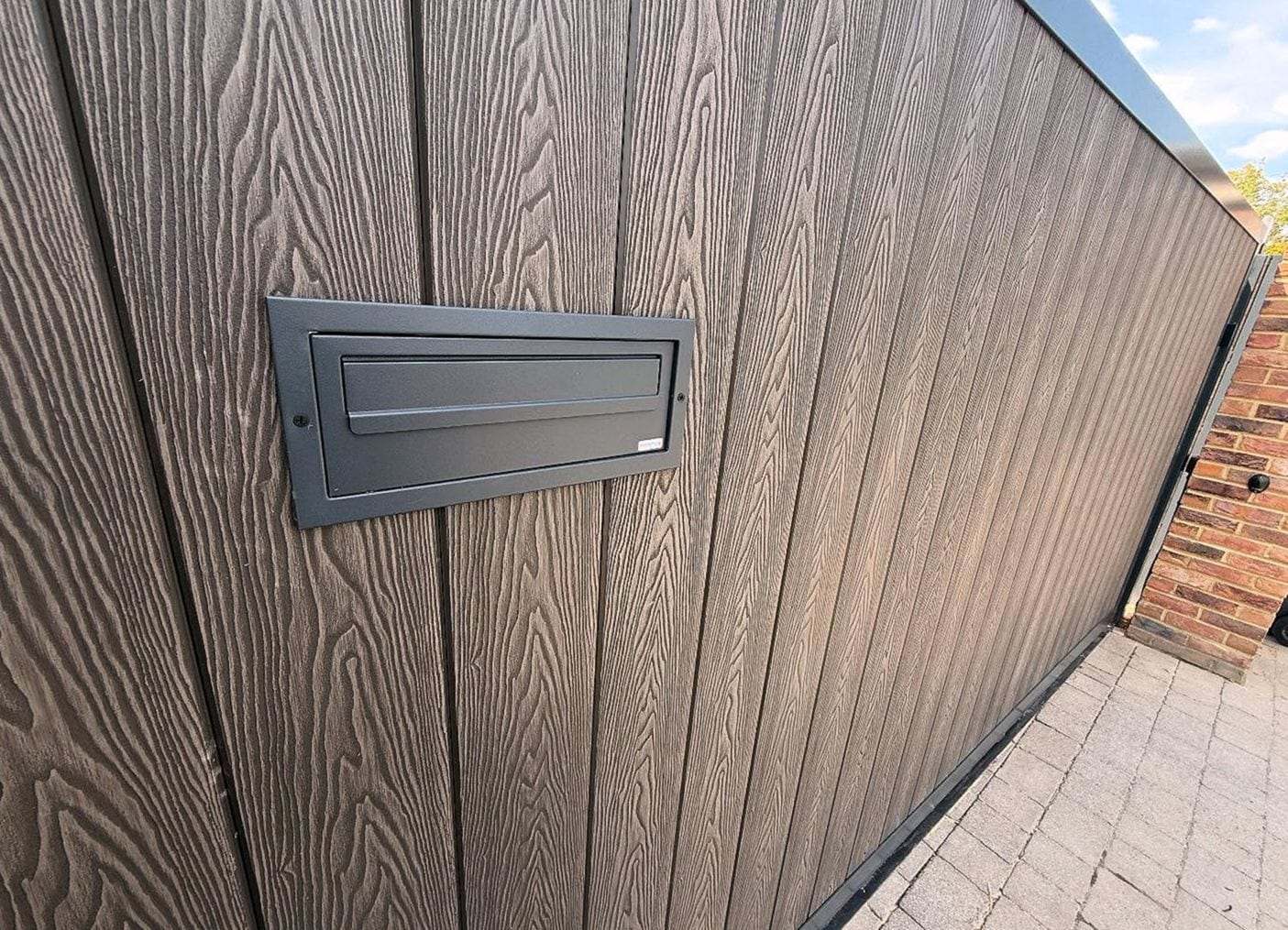
| Composite or vinyl | Wood-grain boards, often in a metal frame | Washing, no painting | Shrugs off moisture and salt; the frame still needs care |
Openers and Entry Systems
An opener needs power at the gate, safety sensors, and posts strong enough for daily motor use. Swing gates take a swing arm, a linear ram or an underground operator; sliding gates take a slide operator on a concrete pad.
Entry systems work through the opener. Remotes suit daily users, a keypad lets you hand out codes, and an intercom or cell phone entry lets visitors ask to be let in. The access control page compares them in more detail.
What Affects the Cost of a Gate Project
These are the things that move a project up or down, and the decision that goes with each.
| Factor | Why it changes cost | What to decide |
|---|---|---|
| Opening width | Wider gates need more material, stronger posts and sometimes two leaves | How wide the vehicles that use it need the opening to be |
| Material and design | Heavier materials and ornamental work take more fabrication | The look you want against the upkeep you will accept |
| Ground and posts | Slopes, roots or old concrete add digging, footings or grading | Whether existing posts and paving stay |
| Power and wiring | An opener far from power needs a longer trench and wiring run | Where the operator goes and how power reaches it |
| Opener and entry system | Each motor, sensor, keypad or intercom adds parts and setup | How people will open the gate day to day |
Before You Request a Quote
- Measure the opening between posts or walls, and note whether the drive slopes.
- Check how much clear space there is in front of, behind and beside the opening.
- Decide whether you want an opener now, later or not at all.
- Think about who uses the gate: family, tenants, deliveries or customers.
- Look for an outlet or power source near the gate.
- Check HOA rules and city permit requirements for gates.
Questions About Buying a Gate
Should I choose an automatic gate or a manual one?
A manual gate is simpler and costs less to keep up, and suits a gate you open now and then. If you use it several times a day, or it must close behind tenants or customers, an opener earns its place. Posts and a power conduit can be planned now for an opener later.
Which material holds up best to snow and road salt?
Aluminum and composite handle moisture and salt with the least upkeep. Steel is stronger for wide, heavy gates and lasts well while its coating stays sound. Wood moves with the weather and needs the most care.
How long does it take to plan a new gate?
It depends on the gate. A standard swing or sliding gate is quicker to plan than a custom design or a job that needs new posts, grading or a power run. HOA approval and permits take their own time, so start those early.
Does my HOA or city need to approve a gate?
Many homeowner associations set rules on gate height, style and color, and some cities have rules for gates near the street. Check both before you settle on a design.
Have an opening that needs a gate? Call and tell us about it, and we will set a time to come look.