
Gate Installation for Driveways, Entrances and Lots
New swing and sliding gates, and the choices to make about style, space, posts and power before one goes in.
A new gate starts with the opening: how wide it is, which way the ground slopes, where the posts can go and how the gate will be used. We install swing and sliding gates for home driveways, yards and small business lots, and set up the operators, keypads and remotes that run them. The tables below lay out the choices, so the conversation about your gate starts from what matters.
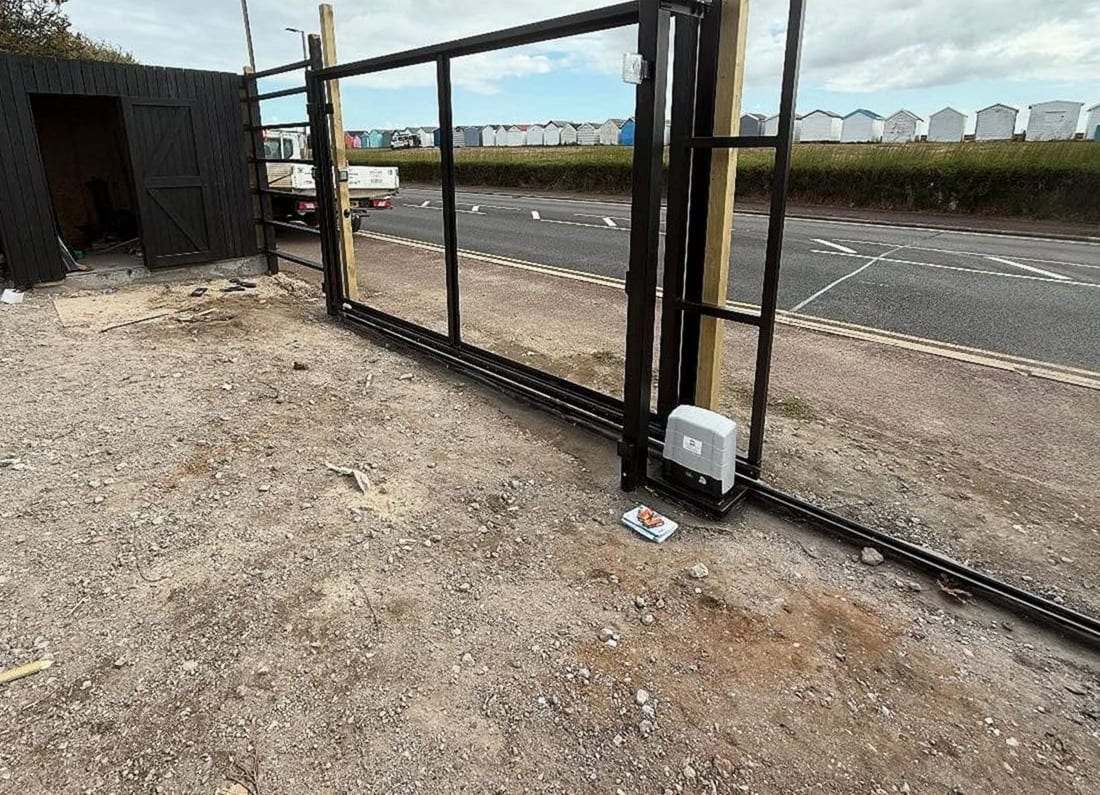
Gate Styles and the Space They Need
The space around the opening often decides the style before looks do.
| Style | Typical material | Space needed | Suited to |
|---|---|---|---|
| Single swing gate | Steel or aluminum | A clear arc behind the gate as wide as the leaf | Narrower drives and yard openings |
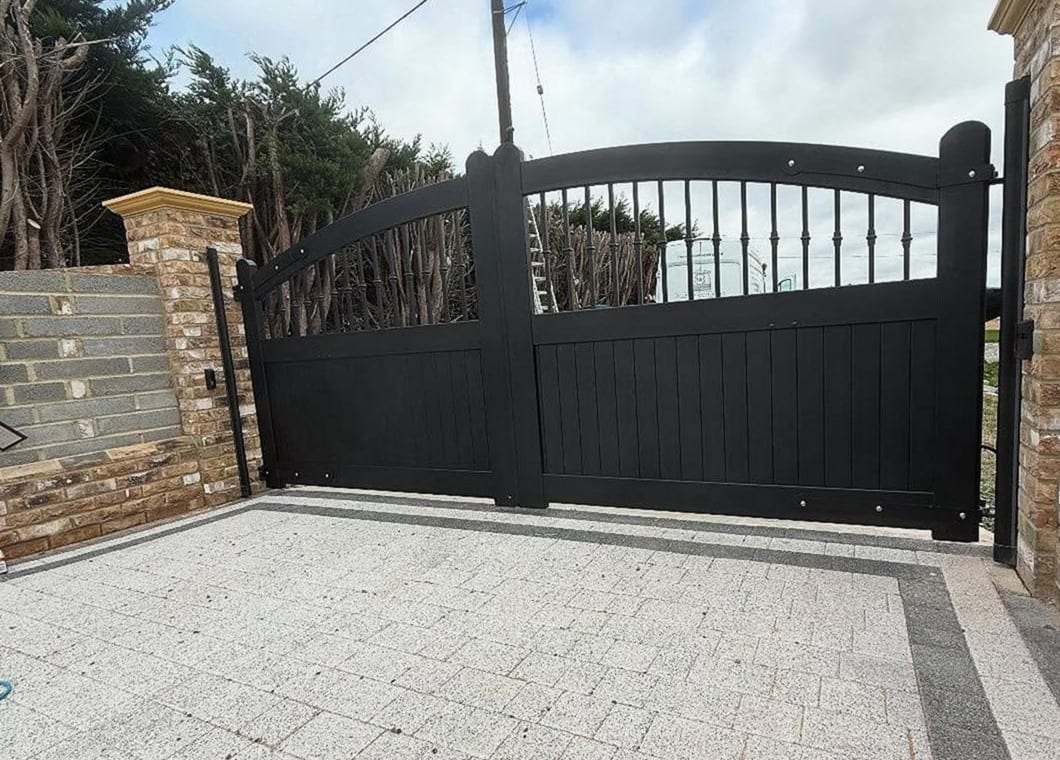
| Double swing gate | Steel, aluminum or wood-look composite on a steel frame | Two smaller arcs; the drive must not rise into the swing | Wide driveways and formal entrances |
| Sliding gate on a ground track | Steel frame with pickets or composite boards | Run-back space along the fence about as long as the opening, on level ground | Drives that rise behind the gate, short setbacks from the street |
| Cantilever sliding gate | Steel or aluminum | Run-back space longer than the opening, for the counterweight tail | Lots and yards where a ground track would fill with gravel or snow |
| Walk gate beside the main gate | Matched to the main gate | A small arc beside the main post | Mail, deliveries and foot traffic without running the opener |
On a tight lot with a drive that climbs toward the house, a slider is often the only style that fits.
What Shapes the Scope of an Installation
Two gates of the same style can be very different jobs. These are the factors that set the size of the work.
| Factor | Why it matters | What to decide |
|---|---|---|
| Opening width and gate weight | Sets the frame, the post size and the operator | One leaf, two leaves or a slider |
| Slope and setback | A swing leaf cannot open uphill, and a slider needs a level run | Which way the gate moves and where it sits |
| Posts and footings | Posts carry the gate and any operator, and must not lean or shift | Reuse existing posts or set new ones |
| Power at the gate | An operator needs a supply, often run underground to the post | Wired, solar, or manual now with conduit laid for later |
| Who comes and goes | Visitors, deliveries and staff need different ways in | Remotes, a keypad, an intercom, a walk gate |
| Local rules | Cities and associations may limit height, style and setback | What to check before ordering |
Posts Set Below the Frost Line
A gate is only as steady as its posts. Footings go below the frost line, which in southeast Michigan building practice is typically around 42 inches, so freeze-thaw cannot lift them. Shallow posts in clay soil heave a little each winter, and the gate starts to sag, drag or miss its latch. Heavy gates and operator posts also need footings sized for the load, and a sliding gate needs a solid, level base for its track or its cantilever rollers.
Decisions to Make Before Requesting a Quote
You do not need every answer before you ask for a quote, but these are the questions a new gate raises:
- Swing or sliding, based on the slope and the space beside or behind the opening.
- The width of the opening, and whether you want a separate walk gate.
- Material and look: steel, aluminum or wood-look composite on a steel frame.
- Manual for now or automatic from the start, and if manual, whether to lay conduit for a later opener.
- How people will get in: remotes, a keypad, an intercom or a mix.
- Any height or style limits from your city or homeowners association.
- Where power can come from, if the gate will be automatic.
Before we suggest a style, we like to see how your household or business actually uses its gate: who comes and goes, how often, on foot or by car. The gate buyer’s guide goes further into styles, materials and what moves the cost of a project.
Questions About Gate Installation
Do I need a permit for a new driveway gate?
It depends on where you live. Rules on gate and fence height, setbacks from the sidewalk and automatic gates vary by city, so check with your city’s building department before you order. Some cities also want a permit for the electrical work that powers an opener.
What about homeowners association rules?
Many associations set rules on gate height, style and color, and some ask you to submit plans first. Rules vary from one association to the next, so check yours before you settle on a design.
Which gate material holds up best?
Steel is strong and suits wide or heavy gates, but it needs a good coating, since road salt and wet snow find any chip in the paint. Aluminum does not rust and is lighter, which suits long sliders and solar operators. Wood-look composite boards on a steel frame give a solid, private gate with less upkeep than real wood.
Can I add an opener later?
Yes, if the gate is planned for it. The posts and hinges need to take an operator’s load, and laying conduit to the gate during installation saves digging up the drive later. A sliding gate also needs room at the post for the operator pad.
Planning a new gate for a drive, yard or lot? Tell us about the opening and we will set a time to come look.