
Gate Openers and Operators for Swing and Sliding Gates
Installing, replacing and upgrading the operators that move driveway and lot gates, and how to choose the right one.
A gate opener, or operator, is the motor, arm and control board that move the gate for you. We install new operators on manual gates, replace worn ones, and upgrade older units with the safety sensors, keypads and remotes people now expect. The right operator depends on the gate: how it moves, what it weighs, how wide it is and how often it runs each day.
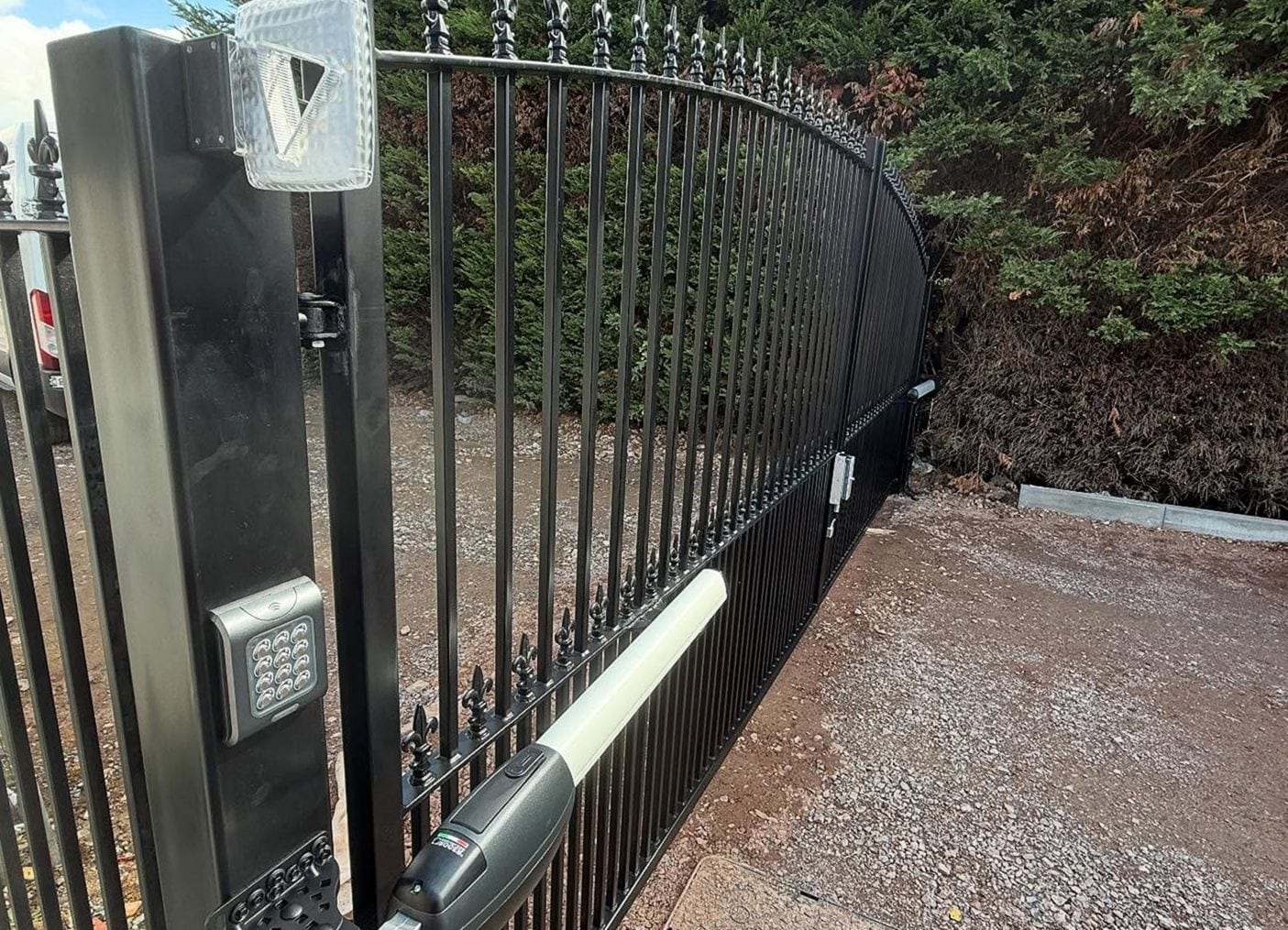
Operator Types and the Gates They Suit
The main kinds of operator in general use:
| Operator type | Suits which gates | Power source | Notes |
|---|---|---|---|
| Articulated swing arm | Swing gates on wide pillars, or where the hinge sits back from the post face | Household AC power, often stepped down to run a low-voltage DC motor | A folding arm copes with deep pillars, but needs room inside the gate to fold |
| Linear (ram) swing actuator | Swing gates on slim posts with the hinge close to the post | Low-voltage DC or line-voltage AC, depending on the model | Neat and compact; bracket positions set how far the gate can open |
| Underground swing operator | Swing gates where no visible arm is wanted | A wired supply to a sealed motor in a buried box | Hidden under the hinge; the box needs good drainage, since standing water can freeze |
| Pad-mounted slide operator, chain drive | Heavy sliding gates, lots and yards | Line-voltage AC, or DC through a transformer | A chain runs the gate’s length; it needs the right tension and a clear path |
| Pad-mounted slide operator, rack and pinion | Residential sliding gates and smaller lots | Household AC or low-voltage DC | A toothed rack on the gate meshes with a gear in the operator; quieter, but the rack must stay aligned |
| Solar-assisted or battery system | Lighter swing or sliding gates far from a power supply | Solar panel charging a battery | Works best with modest daily use and a panel kept clear of shade |
A double swing gate takes a matched pair of swing operators, one for each leaf.
Signs Your Opener Needs Replacing
- The motor hums, clicks or labors, but the gate barely moves.
- The gate stops part way or reverses with nothing in its path, even after the photo eyes are cleaned and lined up.
- It is slower or louder than it used to be, and getting worse.
- The arm, gearbox or housing is cracked, rusted through or leaking oil.
- The control board has failed more than once, or parts for the model are hard to find.
- It has no photo eyes or auto-reverse, and they cannot be added.
- The remotes or keypad you want will not work with it.
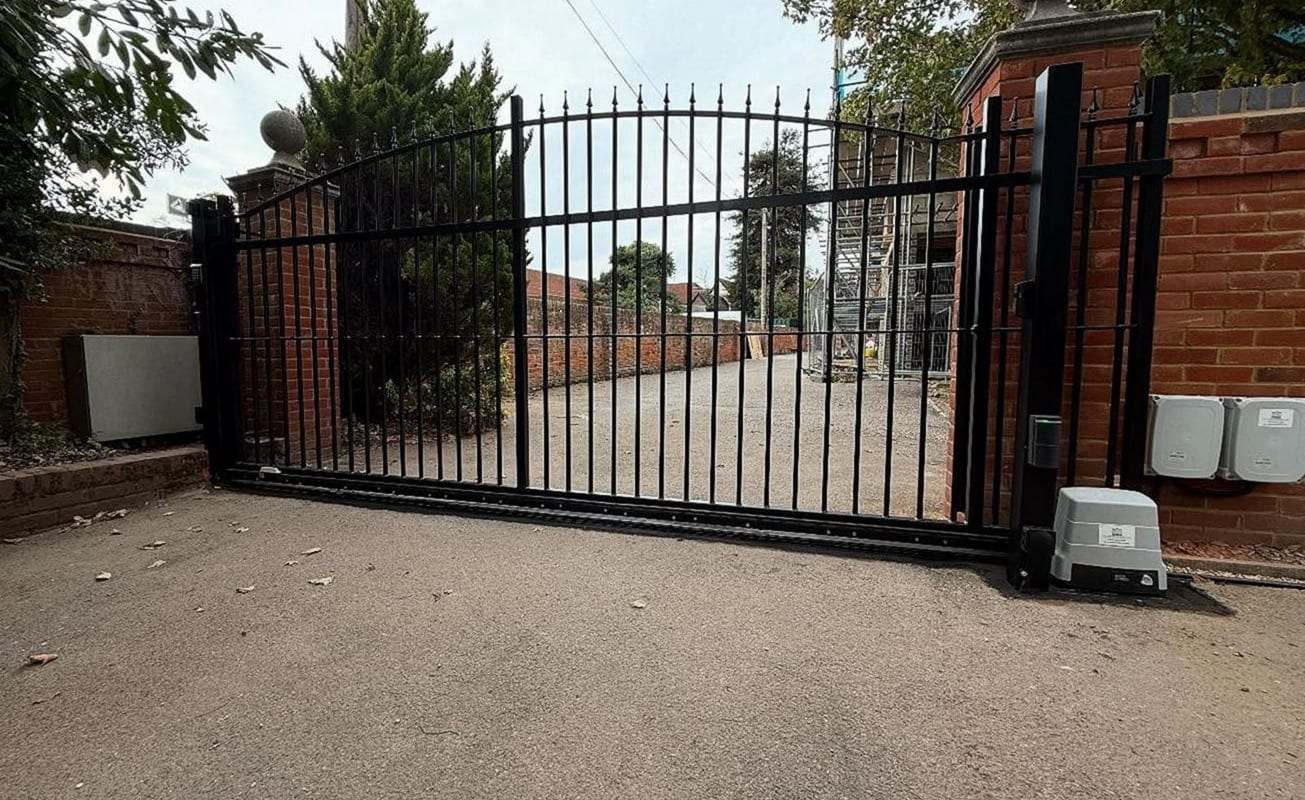
Safety Features to Ask About
A moving gate is heavy and does not stop on its own. Whether you are adding an opener or replacing one, ask about these:
- Photo eyes. Beams across the opening that stop or reverse the gate when a person, pet or car breaks them.
- Auto-reverse. The operator senses extra resistance and backs off instead of pushing on.
- Contact edges. Pressure-sensitive strips on the gate’s leading edge, common on sliding gates.
- Manual release. A keyed release that lets you move the gate by hand when the power is off.
- Battery backup. Keeps the gate opening and closing for a while after a power cut.
These matter most where children play near the drive, where people walk past a lot entrance, or where a sliding gate runs close to a wall.
Matching an Opener to Your Gate
An operator is sized to the gate, not the other way around. Weight, length, wind on a solid panel and the number of cycles each day all count. A busy lot gate needs an operator built for constant use, while a home driveway gate needs less. Before a new opener goes on, the gate should swing or slide freely by hand, or the motor spends its life fighting the gate. Our gate buyer’s guide sets operator types beside gate styles and materials, if you are planning a new setup.
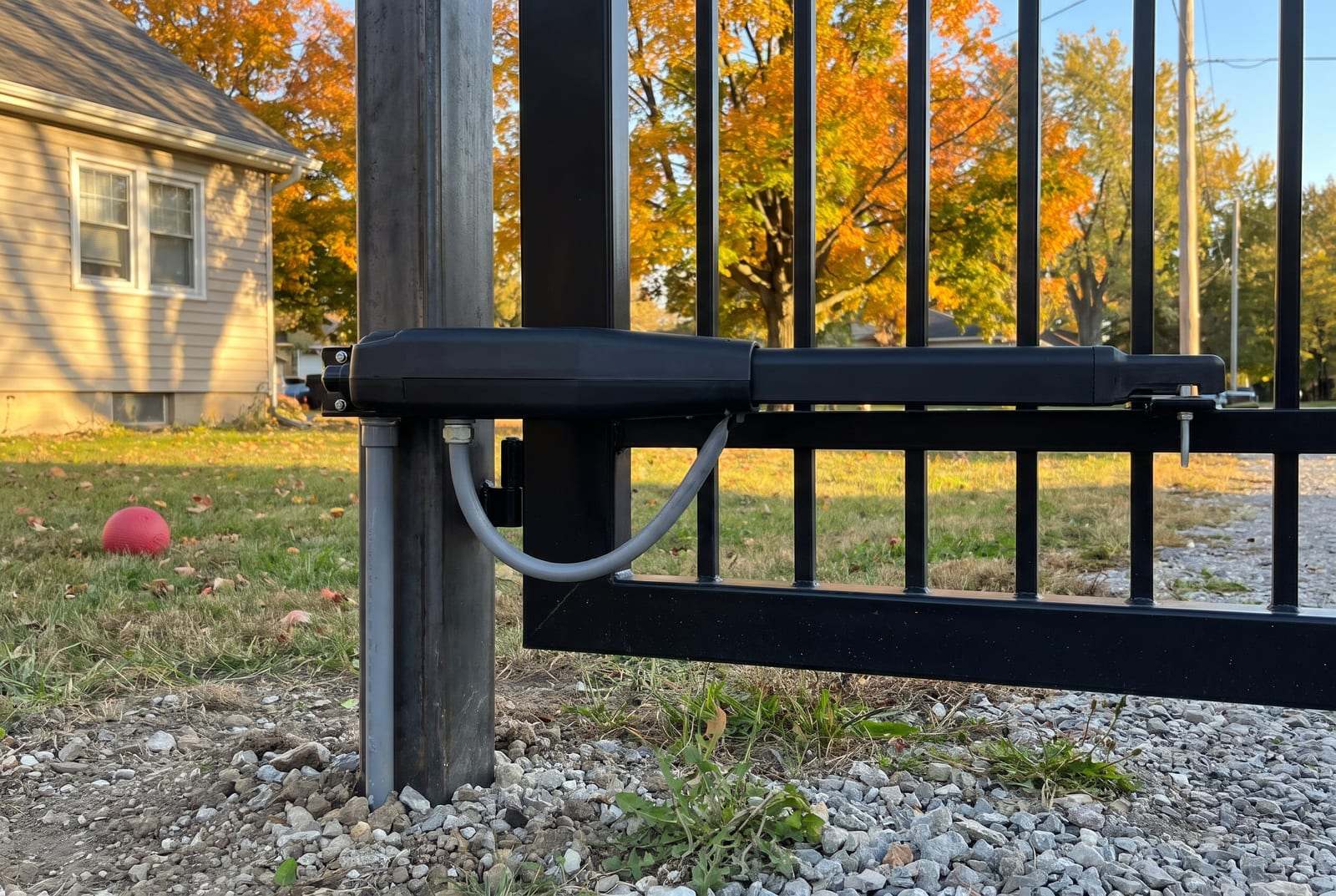
Questions About Openers and Power
What happens to an automatic gate in a power outage?
Without battery backup, the gate stays where it was. Every operator has a manual release, so you can unlock it and move the gate by hand. Many operators can take a backup battery that keeps the gate cycling for a while after the power goes, which is worth having on a gate you rely on.
Will my old remotes work with a new opener?
Often not. Remotes are paired to the receiver in the operator, and older remotes usually go when the operator does. A new operator can take new remotes, a keypad or an intercom, which our access control page covers.
Can a new opener go on the gate I already have?
Usually, if the gate swings or slides freely by hand first. The operator has to suit the gate’s weight, length and style, and the posts have to take its force. A gate that drags needs repair before it gets a new motor, or the new motor wears out early.
Does a solar opener work through a Michigan winter?
It can, on a light gate with modest use and a panel kept clear of snow. Short days and cold batteries cut the charge, so heavy or busy gates are better on wired power.
Opener slowing down, or ready to automate a manual gate? Tell us about the gate and we will set a time to come look.