
Our Work: Gates, Openers and Keypads
Photos from our gate jobs, grouped by the kind of work, with a short note on what each type of job involves.
These photos fall into three kinds of work: sliding gates, swing and arched gates, and the openers and keypads that run them. Each group starts with a short note on what goes into that kind of job, so you can picture what a project like yours involves.
Sliding Gates
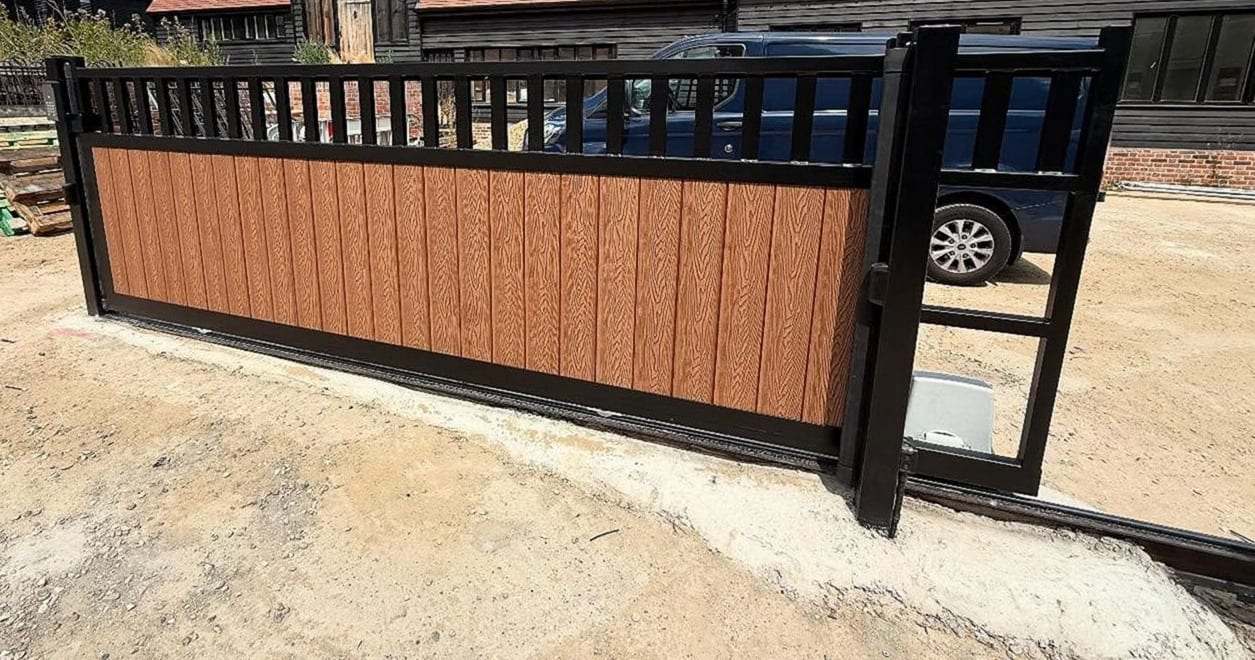
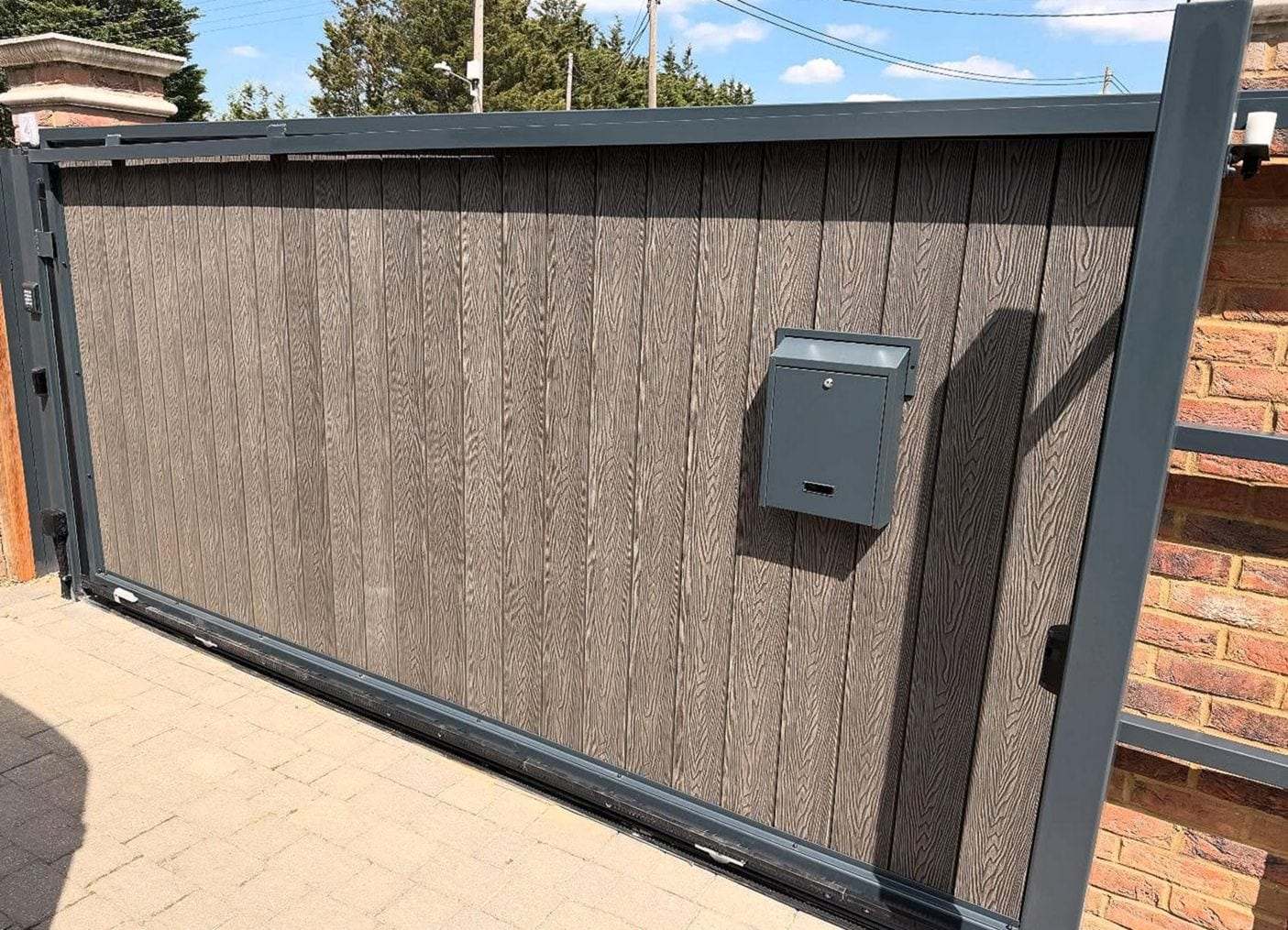
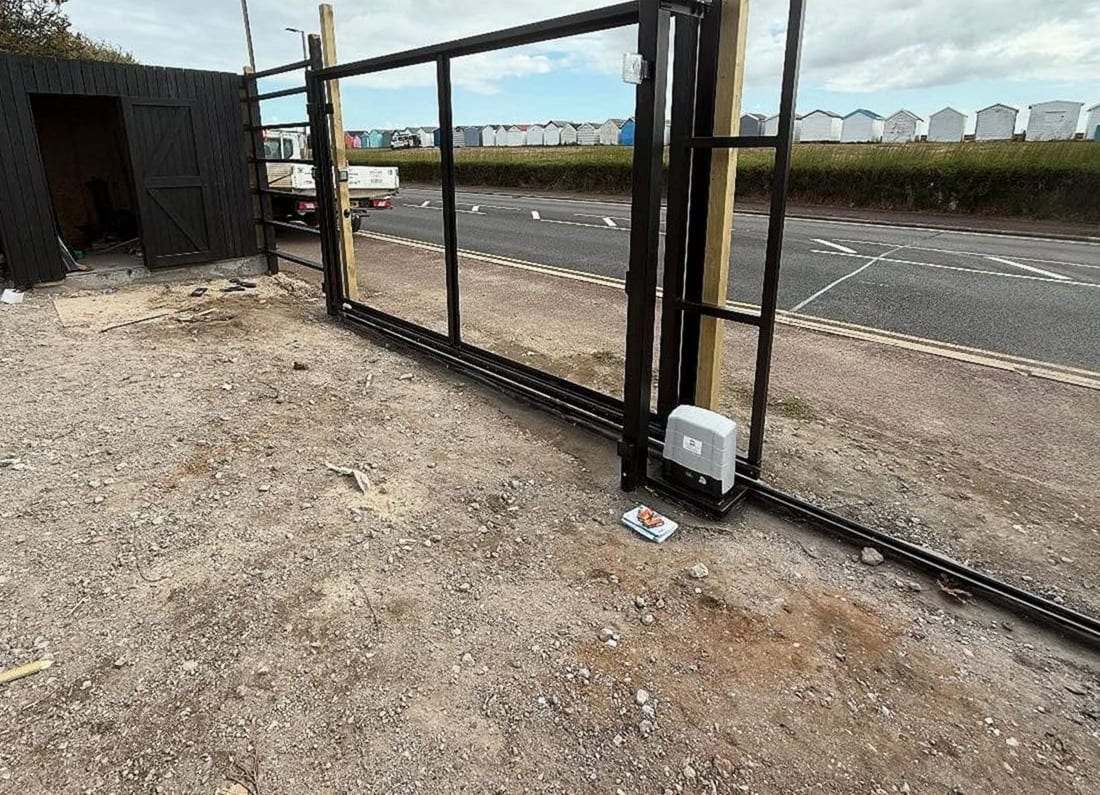
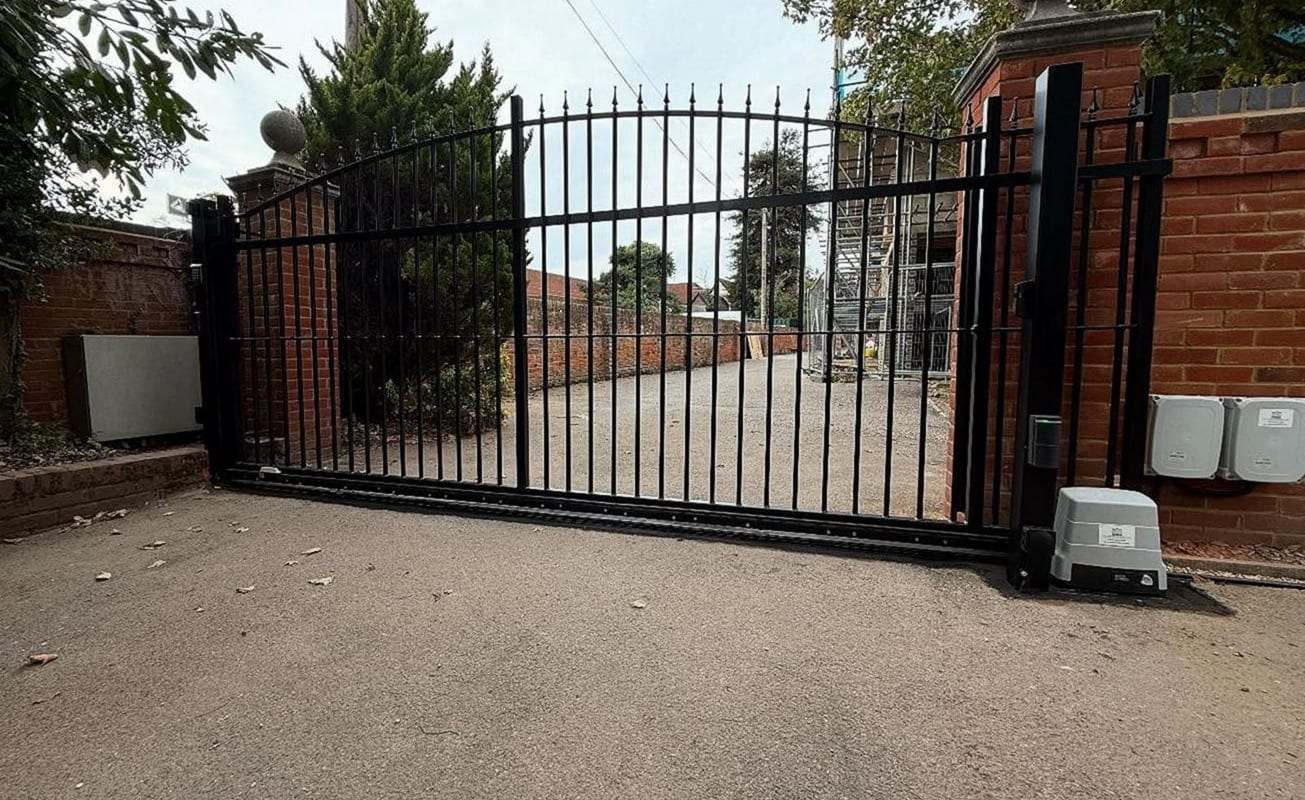
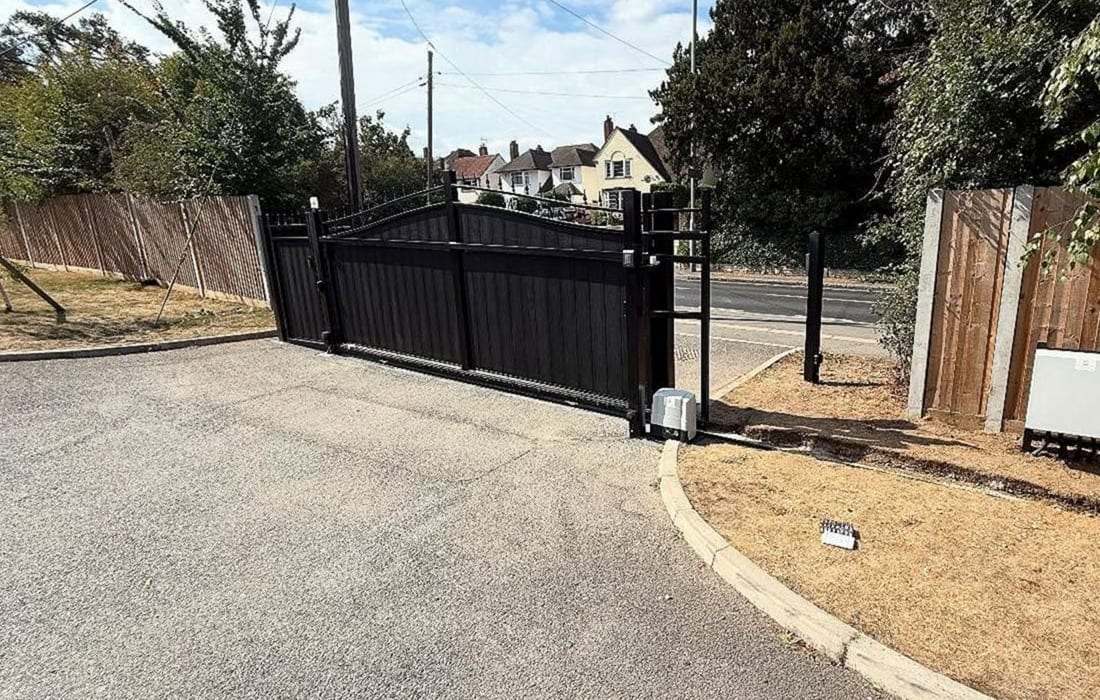
A sliding gate starts at ground level. The posts go in first, then a level track or base, because a gate that rolls on an uneven line wears its wheels and fights its motor. The frame comes next, then the infill: composite boards, steel pickets or solid panels. Guide rollers at the top keep the gate upright as it moves, and a catch post at the far end gives it something solid to close against.
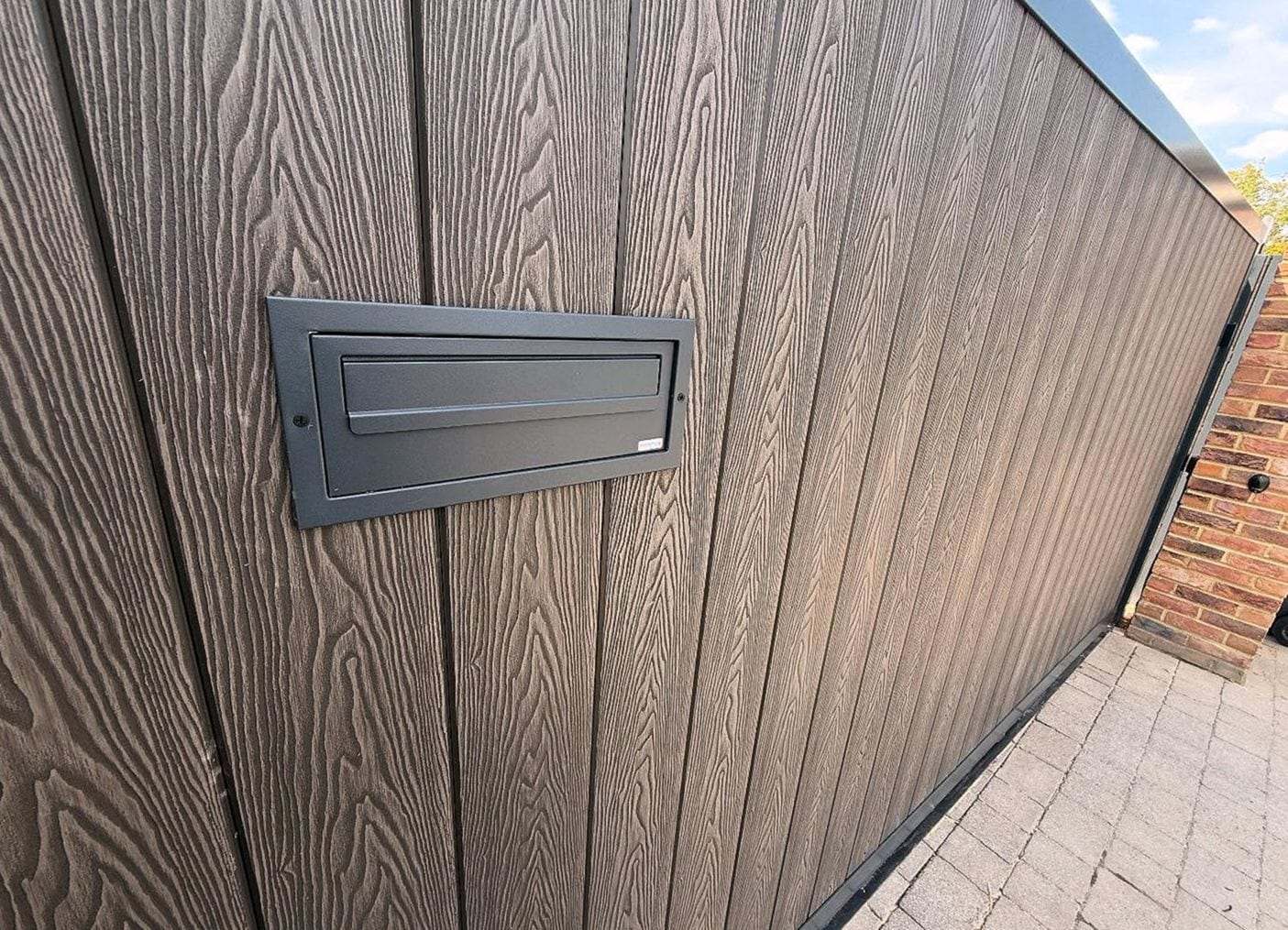
Small details make a slider easier to live with. A mailbox or mail slot can be built into the frame, so the gate does not have to open for the mail. Where the gate will be automated, the slide operator sits on its own pad at the end of the run, with the gear rack fixed along the frame.
Swing and Arched Gates
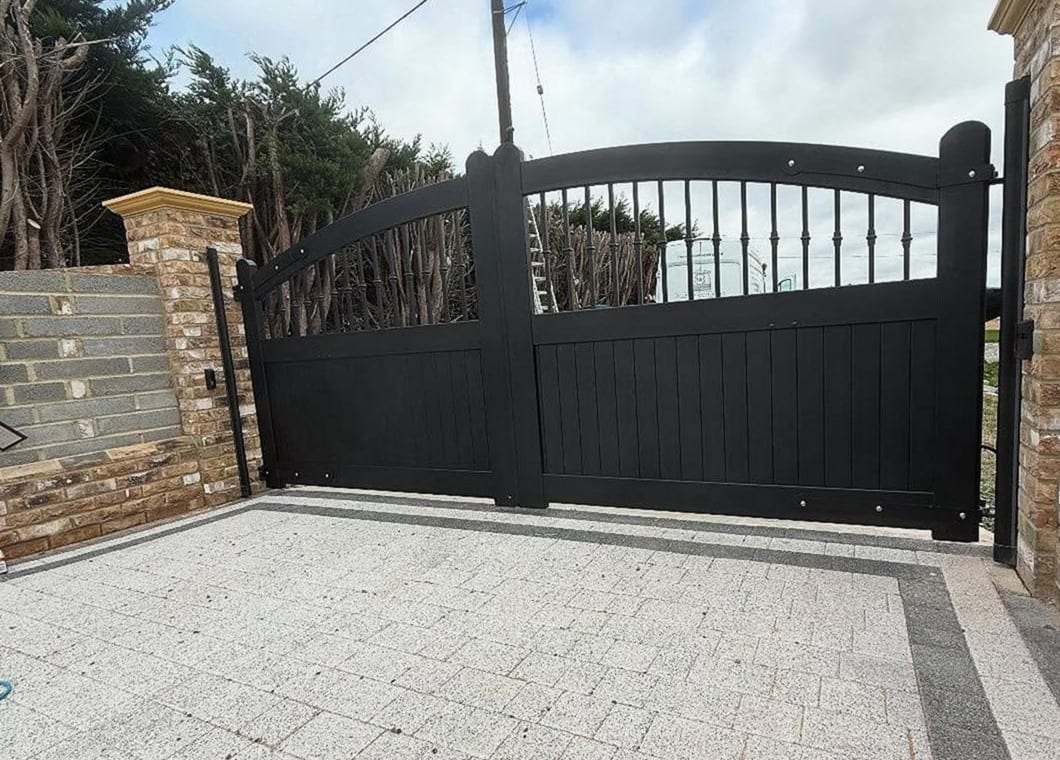
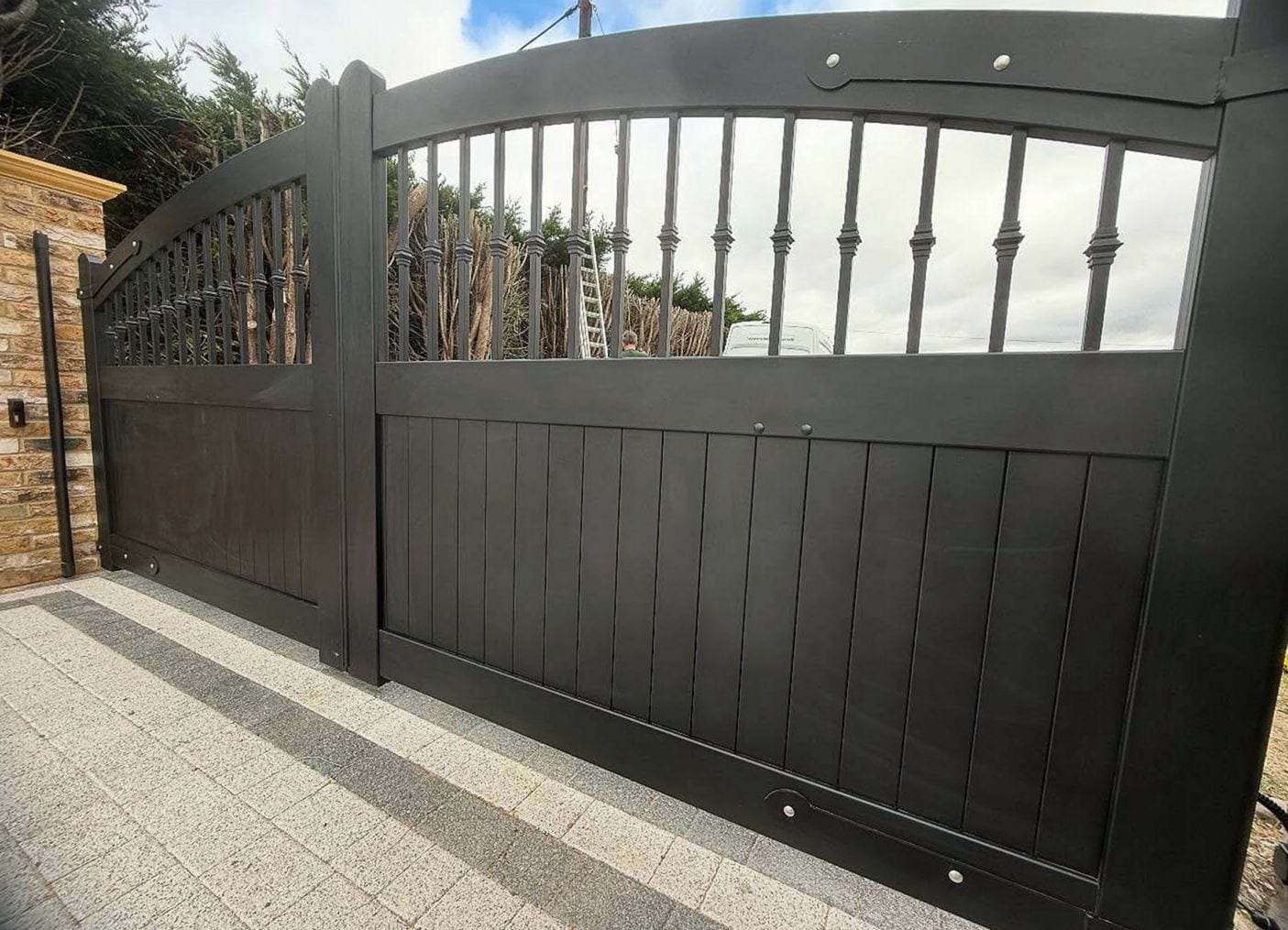
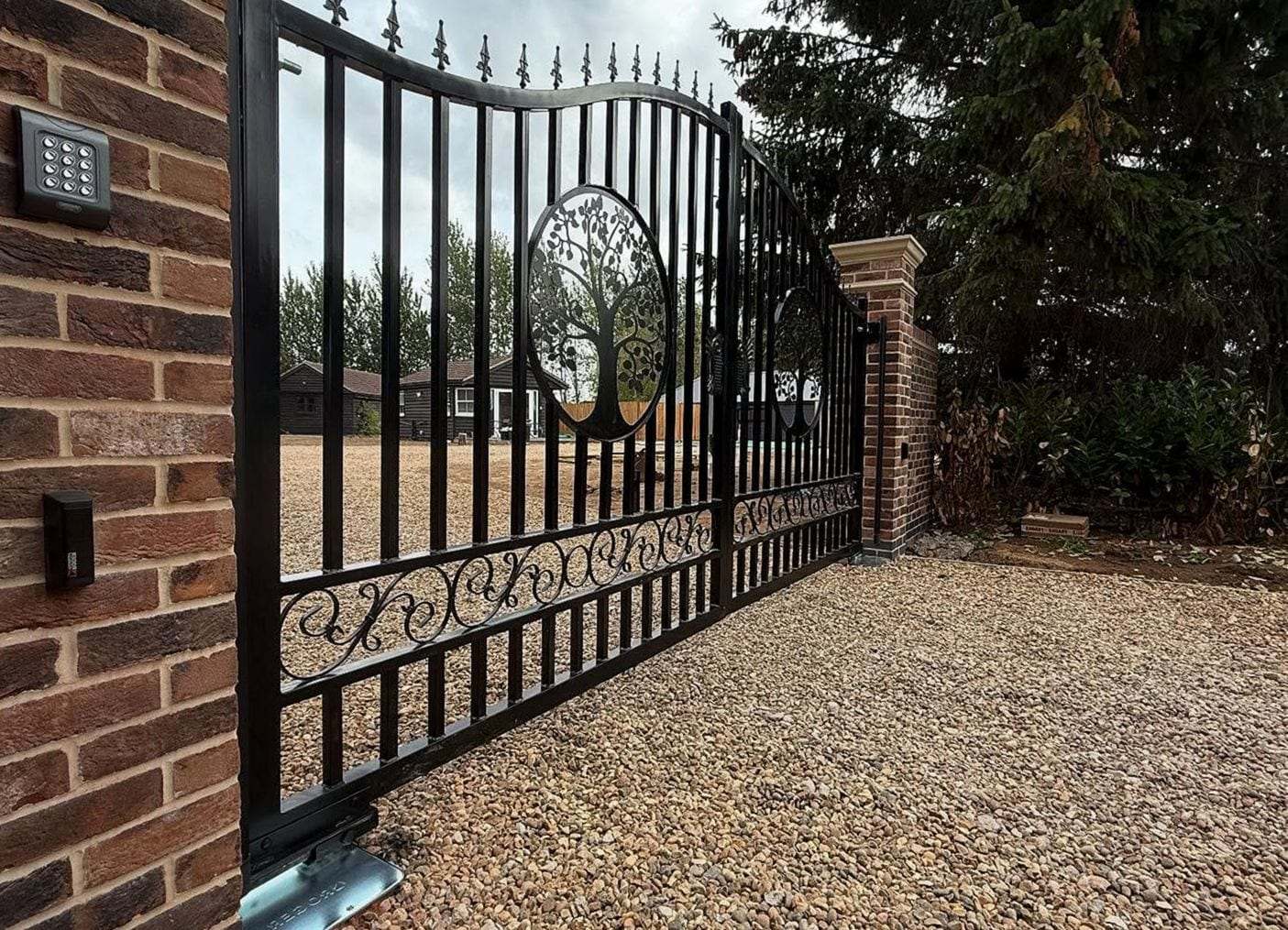
A swing gate hangs from its hinges, so most of the work goes into the posts or piers that carry it. They need to stand plumb and sit deep enough that frost cannot lift them, or the gate starts to sag and drag within a few winters. The leaves are hung with an even gap at the ground and at the latch, then the stops and latches are set so each leaf closes in the same place every time.
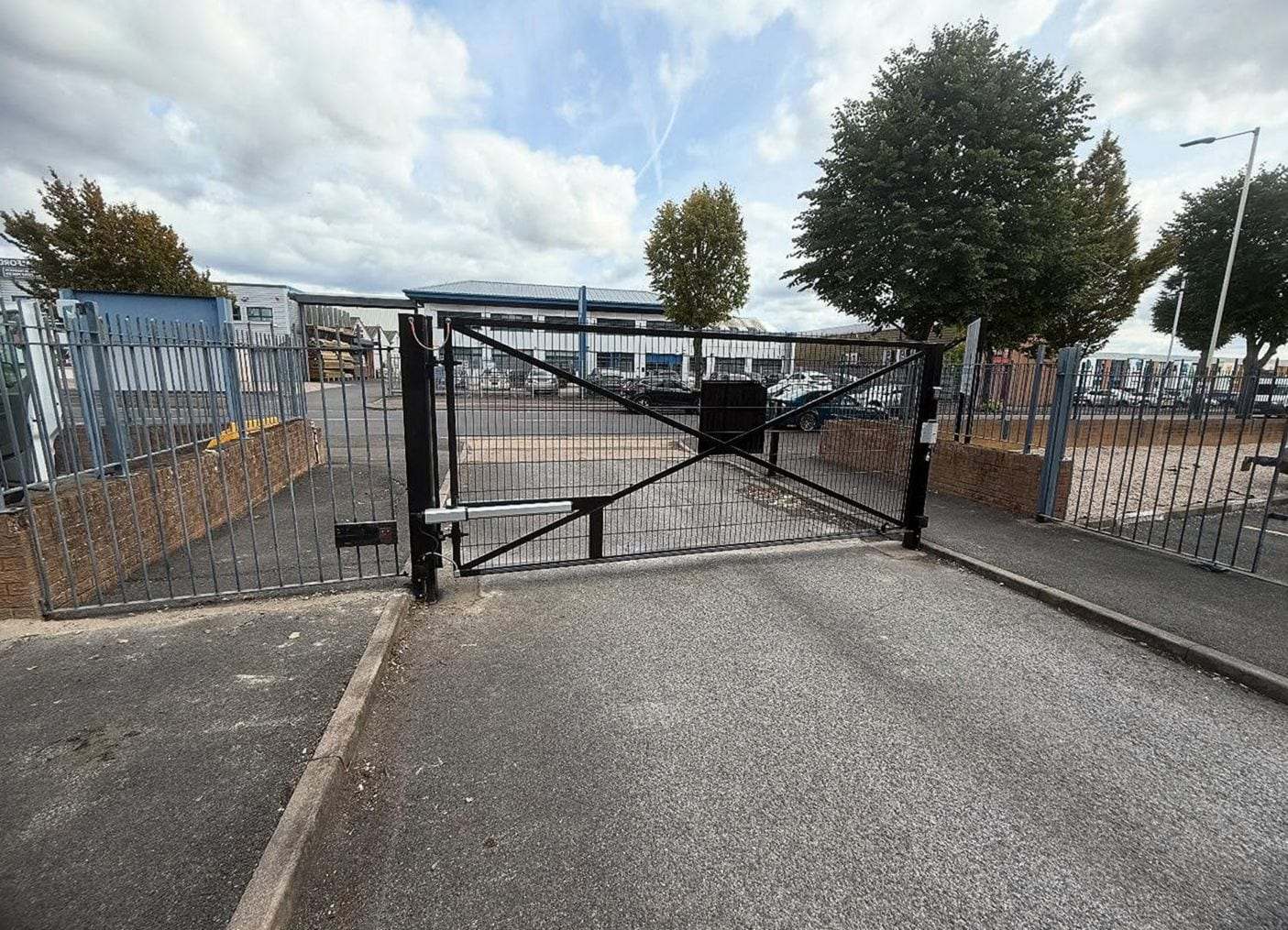
Arched tops, turned spindles and solid lower boards change the look, not the basics. A double gate needs both leaves matched in height and meeting cleanly at the center, with a drop rod or center stop to hold them. At a business entrance, a heavier steel gate and a linear opener take the daily traffic.
Openers, Motors and Keypads
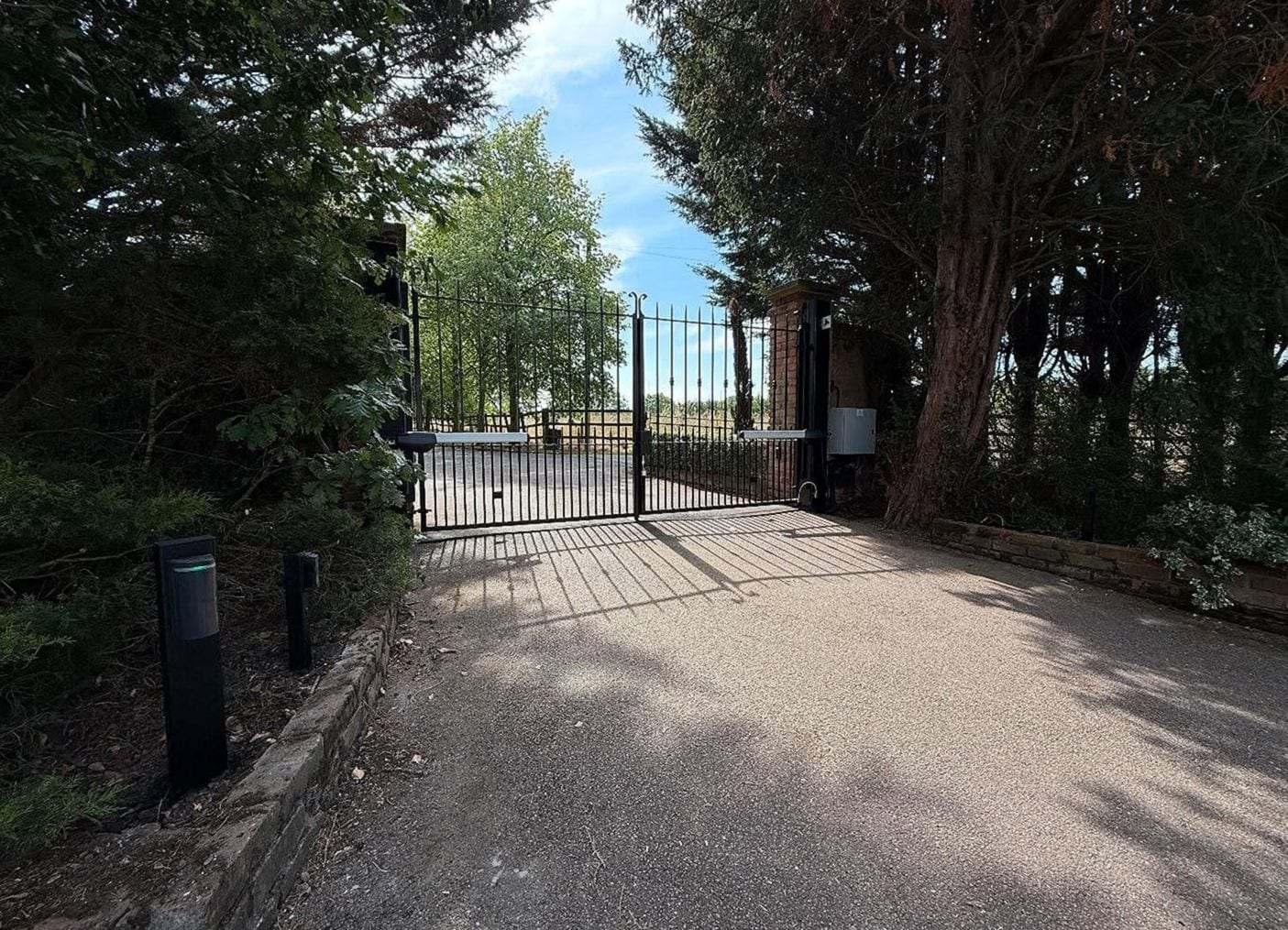
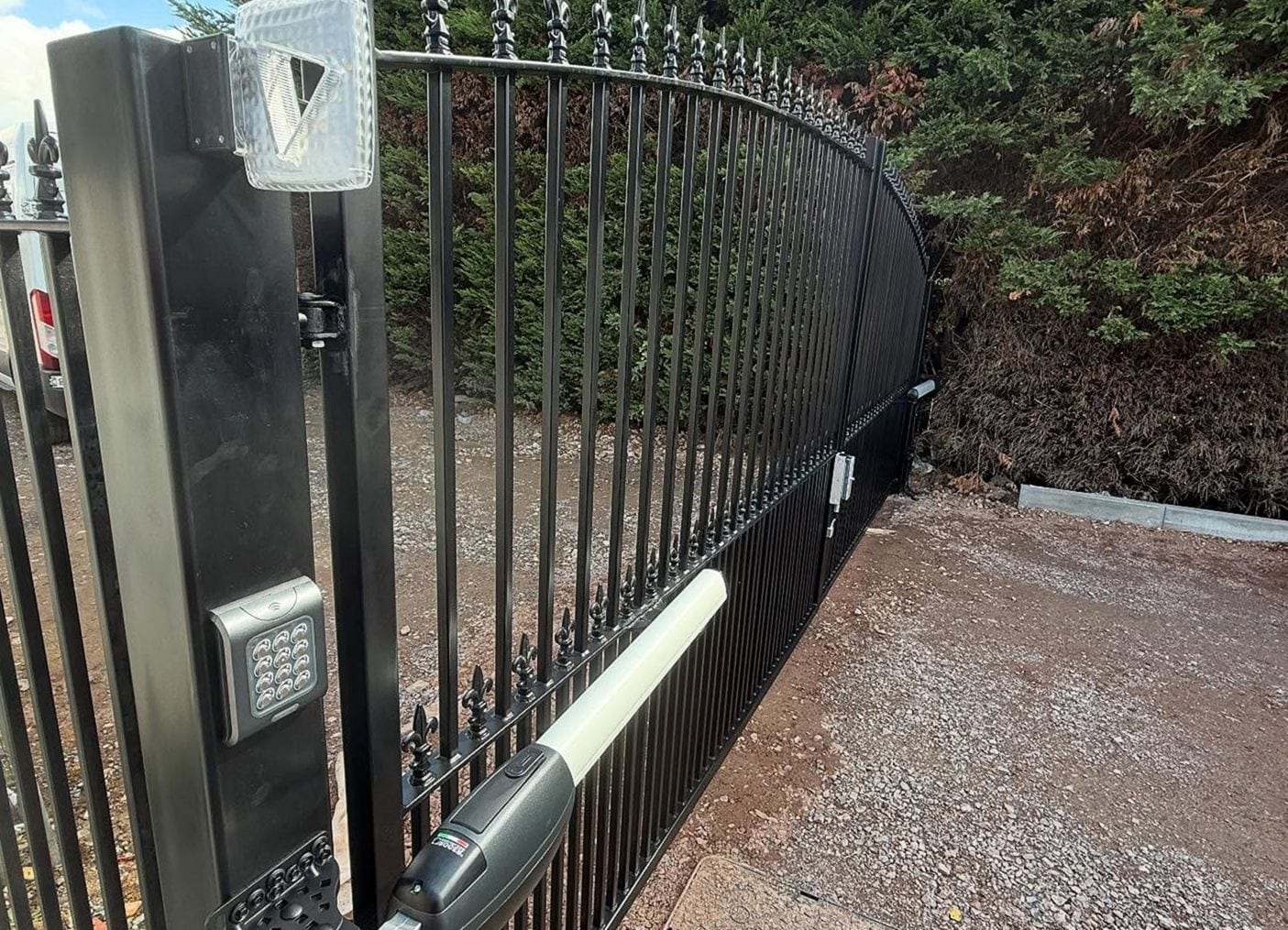
An opener lets you work the gate from the car. A swing gate takes an arm or a ram fixed between the post and the leaf; a sliding gate takes a slide operator on a pad, pulling the gate along a gear rack. Either way, the gate has to move freely by hand first. A motor only hides a binding hinge or a dragging wheel until something wears out.
The rest of the setup is power and control: wiring run to the operator, a control board set for the gate’s weight and travel, photo-eye sensors that stop the gate when something is in its path, and a warning light where traffic needs one. Keypads and push buttons go on a pier or post within reach of a driver’s window, wired back to the operator so a code or a press opens the gate.
If one of these is close to what you have in mind, or your own gate needs this kind of work, the pages below explain each service in more detail.
Want a gate, opener or keypad like these? Call and tell us about your drive or lot, and we will set a time to come look.