
Gate Repair for Swing, Sliding and Automatic Gates
What goes wrong with driveway and lot gates, what usually causes it, and what to expect when you ask us to look.
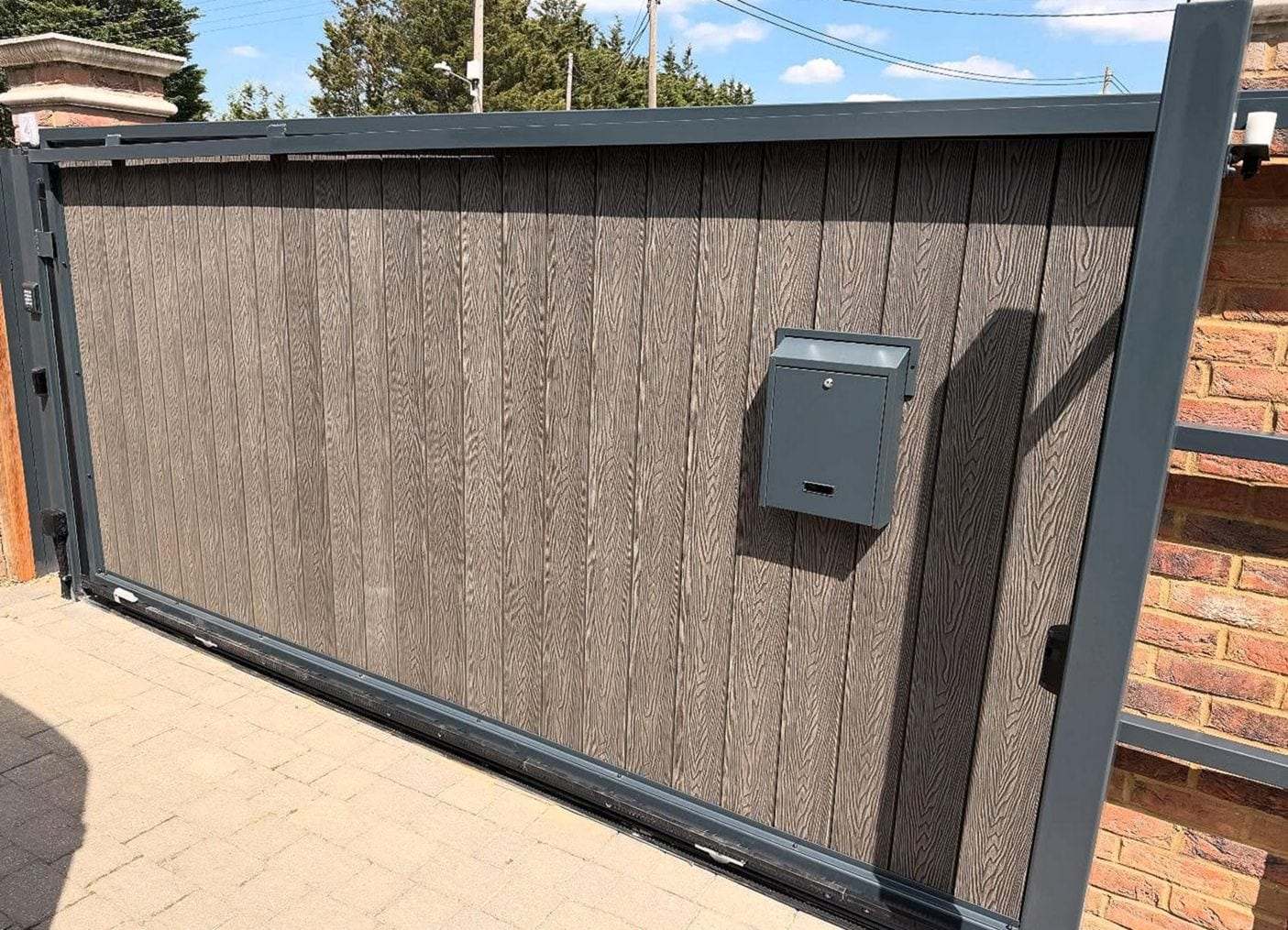
Most gate trouble starts small. A post shifts a little, a roller wears flat, a track fills with grit, and the gate begins to drag, stall or miss its latch. Caught early, that is usually one part, not a new gate. We repair swing and sliding gates, manual and automatic, at homes, rentals and business lots.
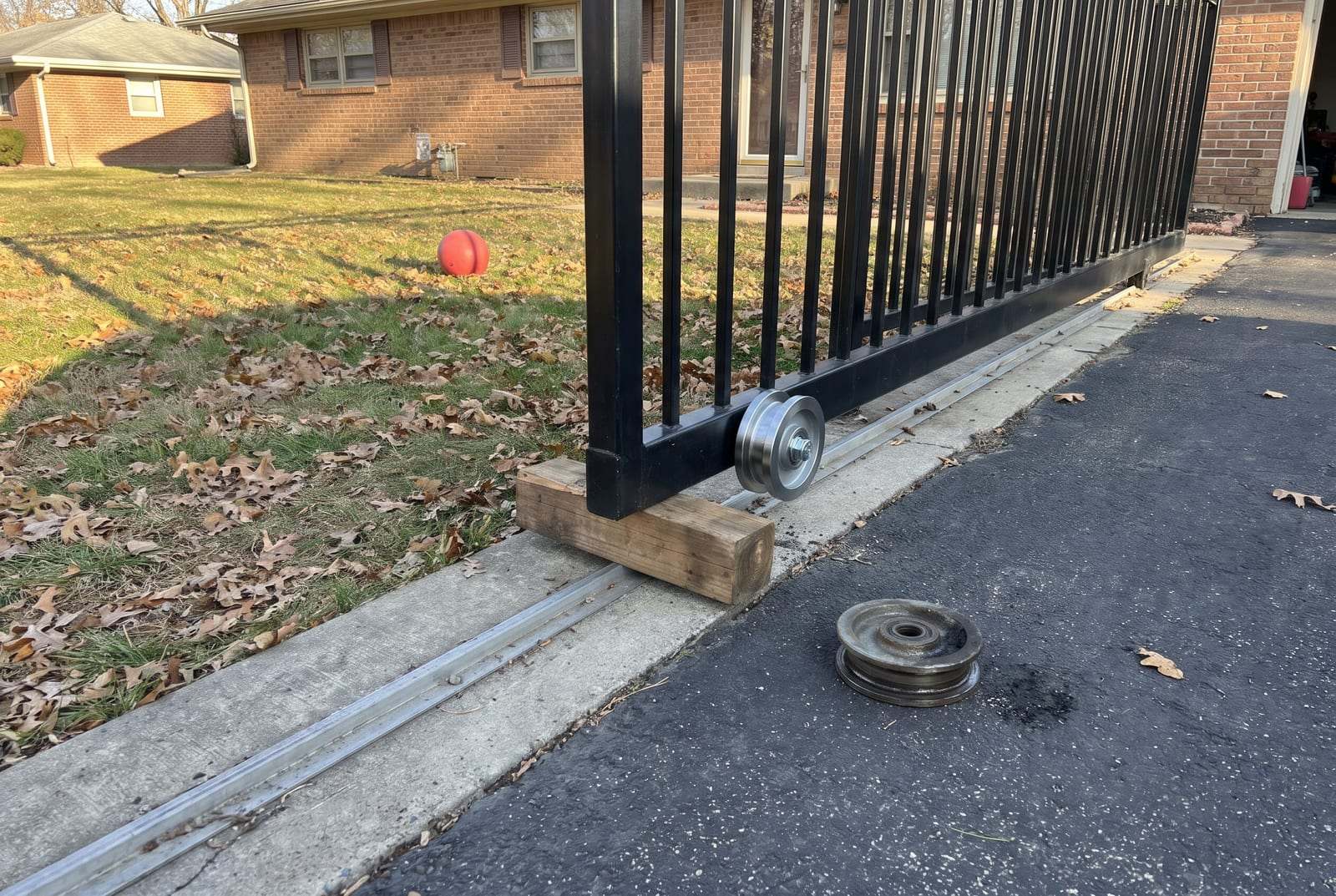
Faults We See Most Often
Most gate repairs begin with one of these:
- The gate sags, so the latch end drops and catches the drive.
- It drags or scrapes through part of its swing or slide.
- It will not latch, or the latch only catches if you lift the gate.
- It grinds, squeals or clunks as it moves.
- It is stuck open or stuck closed, or stops part way.
- Hinges are bent or loose, rollers are worn flat, or the track is bent or packed with dirt.
What Usually Causes Each Fault
The symptom points to the cause, and the cause decides the part.
| What you notice | Likely cause | Repair or replacement part involved |
|---|---|---|
| The gate sags at the latch end | Worn or loose hinges, a post leaning under the weight, or a frame pulled out of square | Hinges and hinge bolts, a post reset, a frame brace |
| It drags on the drive | A sag, or a post lifted by frost heave in clay soil | Post reset or replacement, hinge adjustment |
| The latch will not catch | Gate and post out of line after a sag or a post shift | Latch realignment, a new keeper or striker |
| A sliding gate grinds or wobbles | Worn or rusted rollers, a bent track, or grit packed into the track | Rollers, a track section, upper guide rollers |
| It stops part way or is stuck open or closed | A blocked or misaligned safety sensor, a power fault, a failing control board or a jammed part | Sensor alignment, wiring, the control board |
| Hinges squeal or look bent | Dry pivots, rust, or a knock from a car | Hinges, hinge pins or bearings |
One fault often leads to the next. A worn hinge lets the gate sag, the sag makes it drag, and the drag wears the opener. Fixing the first link early spares the parts further down the chain.
Wiring, Sensors and Control Boards
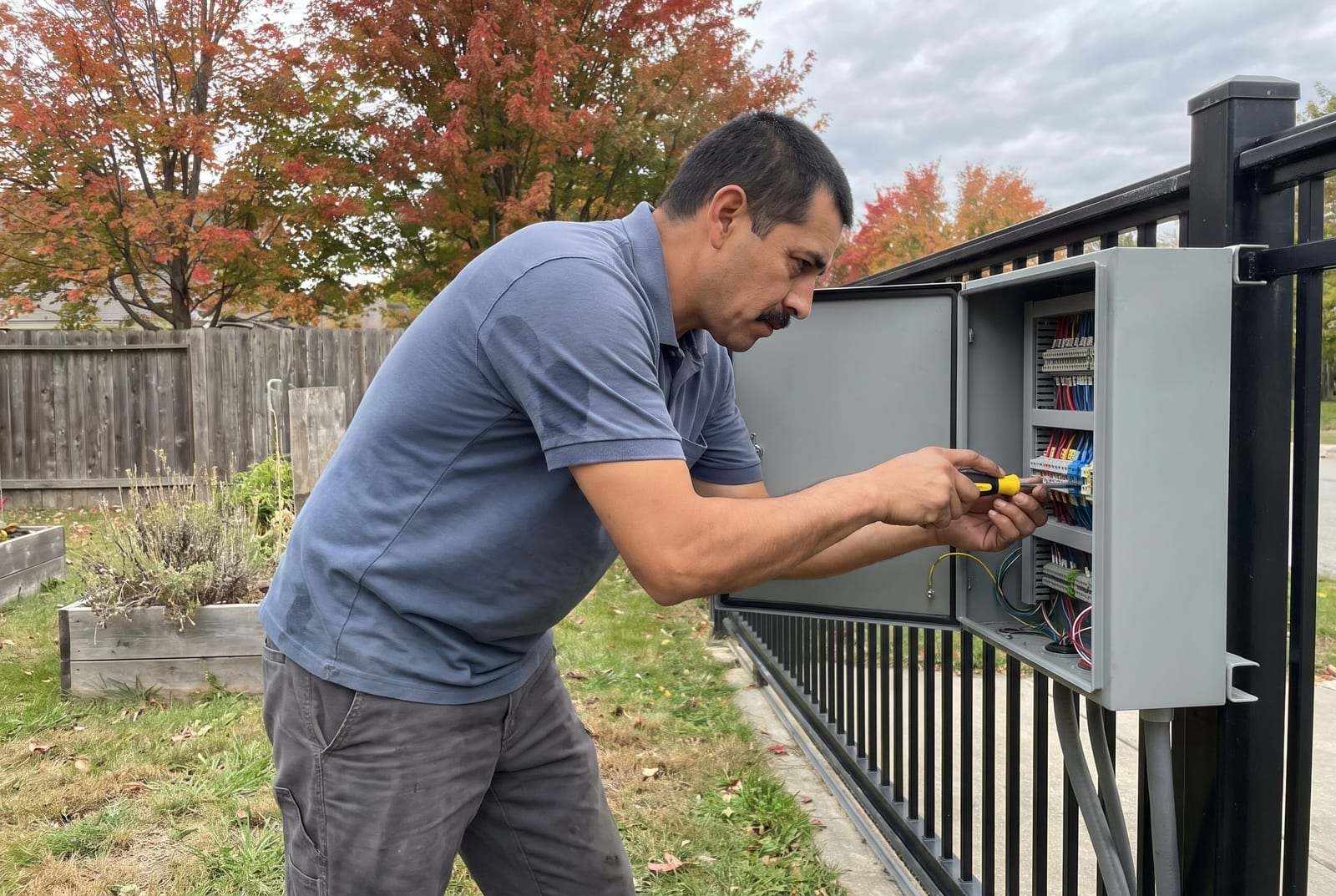
Not every repair is mechanical. On an automatic gate, a stall or a reverse with nothing in the way can come from loose wiring, a failing control board or a safety sensor knocked out of line. We troubleshoot the wiring and boards as well as the hinges, rollers and tracks, because the gate and its operator work as one.
Booking a Repair
Call or message us with a short description of the gate and what it is doing, and we will arrange a time to come take a look. Theo makes the first site visit on most jobs. He walks the driveway, checks the posts and the opener, and explains what needs repair and what can wait.
Safety First
A stuck or derailed gate can move without warning. Switch the opener off, keep children, pets and cars clear, and do not lift a sliding gate back onto its track yourself: gates are heavier than they look. To open it meanwhile, use the manual release and walk it slowly by hand.
Information to Have Ready Before You Call
- Swing gate or sliding gate, and roughly how wide the opening is.
- Whether it opens by hand or with an opener, and the opener’s make if it shows on the housing.
- What it is doing: sagging, dragging, grinding, stopping part way, stuck open or closed.
- When it started, and anything just before: a storm, a hard freeze, a bump from a car, a power cut.
- Whether the remotes, keypad or intercom still respond.
- A photo or two of the gate, if you are sending a message.
If the gate will not open or close at all, a few safe checks come first. The gate troubleshooting guide takes you through power, the photo eyes and the manual release in order.
Questions About Gate Repair
Should I repair my gate or replace it?
Repair it if the frame is sound and the posts are solid. Most faults are a part: a hinge, a roller, a latch or a sensor. Replacement makes sense when the frame is rusted through, cracked at the welds or bent past straightening, or when the list of repairs comes close to the cost of a new gate.
Is it safe to keep using a gate that drags or stops part way?
Use it as little as you can. A dragging gate strains its hinges and its opener, and a gate that stops or reverses on its own may have a sensor fault. Keep people and cars clear while it moves, and never drive through until it has fully stopped.
What can I do until the repair?
Switch the opener off, use the manual release, and leave the gate fully open or fully closed, whichever your household needs. A block under the latch end of a sagging swing gate takes strain off the hinges. Do not tie or chain a gate shut while its opener still has power.
Does winter cause gate trouble?
It can. Freeze-thaw moves posts set in clay soil, and road salt speeds rust on hinges and rollers. A gate that drags only in winter often has a shifted post.
Gate sagging, dragging or stuck? Tell us what it is doing and we will set a time to come look.